Appendix
Detailed datasets that sit behind the main pages, kept here so each page tells one story. Not in the menu; the sections that use them link here.
How many data centres are there?
The most-searched question, and every source gives a different answer. Here's ours, and why the others differ.Our classification
| Source | Count | What it counts | As of |
|---|---|---|---|
| This site: campuses | 79 | Sites joined across six sources, any status | 2026-10-10 |
| This site: operating campuses | 55 | Campuses with evidence of operation (EPA, valuation, completion certificates, OSM) | 2026-10-10 |
| OpenStreetMap buildings | 93 | Mapped buildings and sites, not campuses | 2026-10-10 |
| Valuation list properties | 66 | Rateable properties coded 'data centre' (Cork not included) | 2026-10-03 |
| EPA generator licences | 29 | Sites with ≥50 MWth of on-site plant, any status | 2026-10-03 |
| Planning applications | 156 | Applications mentioning a data centre since 2007, incl. amendments | 2026-10-10 |
| datacentermap.com | 129 | Facilities listed (buildings, incl. small colocation and telecom halls) | Oct 2026 |
| Baxtel | 149 | Facilities incl. planned, with codenames | Oct 2026 |
| datacenters.com | 82 | Colocation provider listings | Oct 2026 |
| Bitpower (Q4 2024) | 92 | 64 large campuses-or-buildings + 19 small + 9 standalone | Q4 2024 |
Competitor counts as displayed on their sites on 3 Oct 2026, not verified.
Who's behind the companies
Planning and licences are filed by special-purpose companies. Here's which operator each one belongs to, with the evidence.
Public sources only: EPA licences, CRO register (company number, status, registered office; no officer data), Building Control notices, council planning pages and press. Each link carries its evidence.
Construction seen from space
Satellite images of each campus every summer since 2017: when the ground was broken and the roofs went on.
| Campus | 17 | 18 | 19 | 20 | 21 | 22 | 23 | 24 | 25 | 26 |
|---|---|---|---|---|---|---|---|---|---|---|
| Microsoft Huntstown | 10 | 12 | 36 | 25 | 18 | 36 | 28 | 28 | 23 | 65 |
| Amazon (AWS) Grange Castle South | 7 | 54 | 23 | 22 | 71 | 72 | 59 | 61 | 58 | 56 |
| Vantage Profile Park | 14 | 30 | 22 | 26 | 21 | 25 | 51 | 63 | 60 | 63 |
| Amazon (AWS) Cruiserath | 17 | 16 | 25 | 52 | 43 | 68 | 54 | 68 | 66 | 62 |
| Data & Power Hub Peamount, Newcastle | 1 | 36 | 14 | 26 | 13 | 31 | 20 | 40 | 24 | 38 |
| Amazon (AWS) Drogheda | 6 | 13 | 5 | 26 | 44 | 41 | 30 | 28 | 41 | 38 |
| EdgeConneX Newcastle Road, Lucan | 18 | 30 | 16 | 18 | 18 | 31 | 54 | 53 | 49 | 42 |
| Google Grange Castle South | 23 | 50 | 33 | 37 | 34 | 40 | 36 | 40 | 37 | 39 |
| Echelon Crag Avenue, Clondalkin | 50 | 63 | 65 | 59 | 67 | 62 | 65 | 61 | 61 | |
| Equinix Profile Park | 53 | 45 | 44 | 41 | 44 | 52 | 57 | 54 | 58 | |
| SDC-EN Bracetown | 11 | 13 | 12 | 14 | 13 | 19 | 16 | 17 | 15 | 16 |
| eir Drogheda | 32 | 47 | 35 | 40 | 36 | 42 | 33 | 35 | 37 | 37 |
| Amazon (AWS) Blanchardstown | 44 | 52 | 48 | 51 | 48 | 57 | 48 | 50 | 44 | 48 |
| Microsoft Grange Castle | 77 | 81 | 81 | 75 | 84 | 79 | 75 | 74 | 75 | |
| Amazon (AWS) Clonshaugh | 77 | 69 | 72 | 69 | 80 | 69 | 75 | 70 | 75 | |
| Amazon (AWS) Belgard, Tallaght | 80 | 78 | 80 | 74 | 81 | 77 | 77 | 74 | 77 | |
| Little Island, Cork (operator not identified) (1) | 48 | 40 | 47 | 38 | 45 | 43 | 44 | 46 | 44 | 45 |
| Echelon Arklow | 42 | 41 | 40 | 33 | 36 | 28 | 21 | 30 | 37 | |
| Meta Clonee | 67 | 43 | 57 | 39 | 42 | 35 | 37 | 34 | 35 | |
| Apple Athenry | 0 | 0 | 0 | 0 | 0 | 0 | 0 | 0 | 0 | 0 |
Share of non-vegetated ground within 300 m of each campus, one clear summer Sentinel-2 scene per year. Jumps mark construction: Microsoft Huntstown 2026, Vantage Profile Park 2023, EdgeConneX Lucan 2023. Apple Athenry, never built, stays near zero. Indicative: a 300 m circle is not a whole campus.
Copernicus Sentinel-2 L2A via Element84 Earth Search (no account) · as of 2026-10-10
Where there is grid headroom
ESB's 38 kV map shows 2,142 MVA of indicative headroom outside Dublin versus 233 MVA in Dublin. Large campuses mostly connect to EirGrid's transmission grid, which this map does not show.
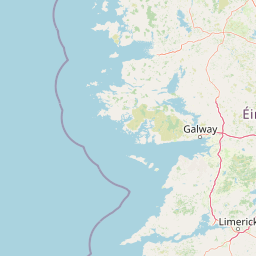
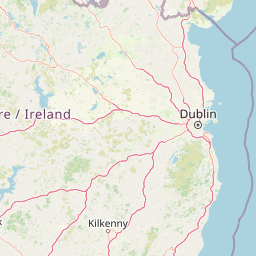
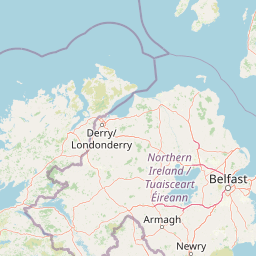




headroomcapped by parentnone · size = demand MVA
Dublin vs the rest, demand headroom
| Connect at | Dublin | Rest |
|---|---|---|
| 38 kV (at 110 kV stations) | 233 MVA 16 groups · 50% none | 2,142 MVA 97 groups · 18% none |
| MV (10/20 kV) | 365 MVA 104 groups · 58% none | 1,230 MVA 434 groups · 46% none |
| 110 kV (ESB 220/110 kV transformers) | 606 MVA 6 groups · 33% none | — |
| LV substations | 67% none 8,520 stns | 55% none 37,348 stns |
Dublin = the four Dublin councils. The 110 kV row is ESB's own 220/110 kV transformers, which exist only in Dublin; elsewhere 110 kV belongs to EirGrid's transmission system and is not on this map. Each row of ESB's file is a transformer group, so a station can appear more than once. Totals add groups that share a parent, so they are upper bounds.
Most demand headroom, 38 kV and 110 kV
| Station | Council | MVA |
|---|---|---|
| Carrickmines 110 kV | Dún Laoghaire-Rathdown | 348.6 |
| Inchicore T2102/T2104 110 kV | Dublin City | 113 |
| Finglas T2103/T2104 110 kV | Fingal | 87.1 |
| Cherrywood 38 kV | Dún Laoghaire-Rathdown | 70.4 |
| Binbane T141/T142 38 kV | Donegal | 66.6 |
| Thornsberry 38 kV | Offaly | 65.1 |
| Poolbeg 110 kV | Dublin City | 57.1 |
| Dalton T141 38 kV | Mayo | 56.5 |
| Reamore T142 38 kV | Kerry | 56.5 |
| Lisheen 38 kV | Tipperary | 56.4 |
| Booltiagh T143 38 kV | Clare | 56.4 |
| Binbane T143 38 kV | Donegal | 56.3 |
| Cauteen T142 38 kV | Tipperary | 56.2 |
| Glenlara T141 38 kV | Cork County | 56.1 |
| Glenree 38 kV | Mayo | 56 |
Outside Dublin, within 10 km of a 220/400 kV station
| Station | MVA | To 220 kV+ |
|---|---|---|
| Trien T143 38 kV · Kerry | 55.8 | 4.3 km |
| Cordal 38 kV · Kerry | 54.3 | 5.7 km |
| Arklow 38 kV · Wicklow | 53.6 | 0.5 km |
59 stations outside Dublin show 10 MVA or more at 38 kV; 14 of them (369 MVA) are within 10 km of a mapped 220/400 kV station (OpenStreetMap). No open fibre map exists, so fibre is not joined.
Around each data-centre campus (stations within 5 km)
| Campus | Nearest station (any voltage) | Groups ≤5 km | MVA ≤5 km | Best within 5 km |
|---|---|---|---|---|
| Kilmainham (operator not identified) | ● Kingsbridge (MV), 0.3 km · 4.6 MVA | 44 (29 green) | 385.7 | Inchicore T2102/T2104 (110 kV), 113 MVA |
| Long Mile Road (operator not identified) | ● Inchicore T2102/T2104 (110 kV), 0.7 km · 113 MVA | 29 (15 green) | 234.2 | Inchicore T2102/T2104 (110 kV), 113 MVA |
| Microsoft Huntstown | ● Finglas T2103/T2104 (110 kV), 0.5 km · 87.1 MVA | 14 (6 green) | 172.6 | Finglas T2103/T2104 (110 kV), 87.1 MVA |
| Digital Realty Park West | ● Semperit (MV), 0.7 km · 0 MVA | 21 (9 green) | 165.9 | Inchicore T2102/T2104 (110 kV), 113 MVA |
| Amazon (AWS) Blanchardstown | ● Ballycoolin (MV), 0.3 km · 0 MVA | 14 (4 green) | 158.6 | Finglas T2103/T2104 (110 kV), 87.1 MVA |
| Blanchardstown (operator not identified) (1) | ● Ballycoolin (MV), 0.4 km · 0 MVA | 14 (4 green) | 158.6 | Finglas T2103/T2104 (110 kV), 87.1 MVA |
| Blanchardstown (operator not identified) (2) | ● College Park (MV), 0.4 km · 0 MVA | 12 (4 green) | 158.6 | Finglas T2103/T2104 (110 kV), 87.1 MVA |
| DCF Technology Blanchardstown | ● Ballycoolin (MV), 0.3 km · 0 MVA | 14 (4 green) | 158.6 | Finglas T2103/T2104 (110 kV), 87.1 MVA |
| Digital Realty Blanchardstown | ● College Park (MV), 0.3 km · 0 MVA | 12 (4 green) | 158.6 | Finglas T2103/T2104 (110 kV), 87.1 MVA |
| Equinix Blanchardstown | ● Ballycoolin (MV), 0.8 km · 0 MVA | 13 (4 green) | 158.6 | Finglas T2103/T2104 (110 kV), 87.1 MVA |
| Equinix Northwest Business Park | ● Ballycoolin (MV), 1.2 km · 0 MVA | 13 (4 green) | 158.6 | Finglas T2103/T2104 (110 kV), 87.1 MVA |
| Gemini DC Fund Ballycoolin | ● Ballycoolin (MV), 0.5 km · 0 MVA | 13 (4 green) | 158.6 | Finglas T2103/T2104 (110 kV), 87.1 MVA |
| K2 Strategic Ballycoolin | ● Ballycoolin (MV), 0.5 km · 0 MVA | 13 (4 green) | 158.6 | Finglas T2103/T2104 (110 kV), 87.1 MVA |
| Keppel Ballycoolin | ● Ballycoolin (MV), 0.4 km · 0 MVA | 14 (4 green) | 158.6 | Finglas T2103/T2104 (110 kV), 87.1 MVA |
| Pure DC Orion Business Campus | ● Ballycoolin (MV), 0.8 km · 0 MVA | 13 (4 green) | 158.6 | Finglas T2103/T2104 (110 kV), 87.1 MVA |
| near Ballycoolin (operator not identified) | ● Ballycoolin (MV), 0.3 km · 0 MVA | 14 (4 green) | 158.6 | Finglas T2103/T2104 (110 kV), 87.1 MVA |
| Amazon (AWS) Cruiserath | ● College Park (MV), 0.5 km · 0 MVA | 10 (3 green) | 150.7 | Finglas T2103/T2104 (110 kV), 87.1 MVA |
| Amazon (AWS) Belgard, Tallaght | ● Belgard (MV), 0.3 km · 0 MVA | 19 (7 green) | 143.5 | Inchicore T2102/T2104 (110 kV), 113 MVA |
| Amazon (AWS) Greenhills Road, Tallaght | ● Tymon (MV), 0.9 km · 0 MVA | 21 (7 green) | 143.5 | Inchicore T2102/T2104 (110 kV), 113 MVA |
| Echelon Crag Avenue, Clondalkin | ● Clondalkin (MV), 1.2 km · 0 MVA | 22 (5 green) | 138.1 | Inchicore T2102/T2104 (110 kV), 113 MVA |
| Echelon Arklow | ● Tinahask (MV), 2.2 km · 0 MVA | 3 (2 green) | 71.7 | Arklow (38 kV), 53.6 MVA |
| Dundalk (operator not identified) | ● Marshes T423 (MV), 0.1 km · 9 MVA | 8 (8 green) | 62.6 | Dundalk (38 kV), 21 MVA |
| Galway (operator not identified) | ● Headford Road (MV), 0.6 km · 0 MVA | 7 (3 green) | 59.4 | Salthill (38 kV), 44.9 MVA |
| Meta Clonee | ● Macetown (MV), 2 km · 0 MVA | 4 (1 green) | 41.3 | Corduff (MV), 41.3 MVA |
| Amazon (AWS) Clonshaugh | ● Clonshaugh (MV), 0.3 km · 0 MVA | 14 (4 green) | 23.6 | Artane (MV), 13 MVA |
| Clonshaugh (operator not identified) (1) | ● Coolock (MV), 0.8 km · 5.8 MVA | 16 (4 green) | 23.6 | Artane (MV), 13 MVA |
| Clonshaugh (operator not identified) (2) | ● Clonshaugh (MV), 0.2 km · 0 MVA | 13 (4 green) | 23.6 | Artane (MV), 13 MVA |
| Digital Realty Clonshaugh | ● Coolock (MV), 0.7 km · 5.8 MVA | 14 (4 green) | 23.6 | Artane (MV), 13 MVA |
| EXA Infrastructure Dublin | ● Coolock (MV), 0.8 km · 5.8 MVA | 15 (4 green) | 23.6 | Artane (MV), 13 MVA |
| GTT (Hibernia) Clonshaugh | ● Coolock (MV), 0.8 km · 5.8 MVA | 15 (4 green) | 23.6 | Artane (MV), 13 MVA |
| Verizon near Clonshaugh | ● Clonshaugh (MV), 0.2 km · 0 MVA | 14 (4 green) | 23.6 | Artane (MV), 13 MVA |
| Vodafone Clonshaugh | ● Clonshaugh (MV), 0.3 km · 0 MVA | 14 (4 green) | 23.6 | Artane (MV), 13 MVA |
| eir near Clonshaugh | ● Coolock (MV), 0.7 km · 5.8 MVA | 15 (4 green) | 23.6 | Artane (MV), 13 MVA |
| near Clonshaugh (operator not identified) | ● Clonshaugh (MV), 0.6 km · 0 MVA | 17 (4 green) | 23.6 | Artane (MV), 13 MVA |
| Ericsson Athlone | ● Garrycastle (MV), 0.7 km · 7.6 MVA | 4 (2 green) | 21.7 | Garrycastle (MV), 7.6 MVA |
| National Technology Park, Limerick (operator not identified) | ● Castletroy (MV), 0.9 km · 0 MVA | 6 (2 green) | 20.6 | Singland (MV), 13.8 MVA |
| CIX Cork city | ● Dennehys Cross (MV), 1.7 km · 0 MVA | 10 (3 green) | 18.1 | Liberty Street (MV), 7.9 MVA |
| Amazon (AWS) Citywest | ● Citywest (MV), 0.4 km · 0 MVA | 14 (1 green) | 13.9 | Cookstown (MV), 13.9 MVA |
| BT Citywest | ● Citywest (MV), 0.4 km · 0 MVA | 14 (1 green) | 13.9 | Cookstown (MV), 13.9 MVA |
| Digital Realty Profile Park | ● Balgaddy (MV), 1.7 km · 0 MVA | 12 (1 green) | 13.9 | Cookstown (MV), 13.9 MVA |
| Equinix Citywest | ● Citywest (MV), 0.4 km · 0 MVA | 14 (1 green) | 13.9 | Cookstown (MV), 13.9 MVA |
| Equinix Profile Park | ● Balgaddy (MV), 1.2 km · 0 MVA | 12 (1 green) | 13.9 | Cookstown (MV), 13.9 MVA |
| Google Grange Castle South | ● Balgaddy (MV), 1.5 km · 0 MVA | 12 (1 green) | 13.9 | Cookstown (MV), 13.9 MVA |
| K2 Strategic Citywest | ● Citywest (MV), 0.6 km · 0 MVA | 14 (1 green) | 13.9 | Cookstown (MV), 13.9 MVA |
| Keppel Citywest | ● Citywest (MV), 0.3 km · 0 MVA | 14 (1 green) | 13.9 | Cookstown (MV), 13.9 MVA |
| Vantage Profile Park | ● Balgaddy (MV), 1.3 km · 0 MVA | 12 (1 green) | 13.9 | Cookstown (MV), 13.9 MVA |
| eir Citywest | ● Citywest (MV), 0.6 km · 0 MVA | 14 (1 green) | 13.9 | Cookstown (MV), 13.9 MVA |
| Little Island, Cork (operator not identified) (1) | ● Castleview (MV), 1 km · 6.8 MVA | 3 (1 green) | 6.8 | Castleview (MV), 6.8 MVA |
| Siemens Shannon | ● Drumline (38 kV), 1.3 km · 0.4 MVA | 4 (1 green) | 0.8 | Drumline (38 kV), 0.4 MVA |
| Amazon (AWS) Drogheda | ● Rathmullan (MV), 1.4 km · 0 MVA | 5 (0 green) | 0 | none |
| Amazon (AWS) Grange Castle South | ● Balgaddy (MV), 1 km · 0 MVA | 8 (0 green) | 0 | none |
| Amazon (AWS) Leixlip | ● Celbridge (MV), 2.5 km · 0 MVA | 5 (0 green) | 0 | none |
| CyrusOne Grange Castle South | ● Balgaddy (MV), 1.3 km · 0 MVA | 9 (0 green) | 0 | none |
| Data & Power Hub Peamount, Newcastle | ● Balgaddy (MV), 1.4 km · 0 MVA | 7 (0 green) | 0 | none |
| Digital Realty Grange Castle | ● Grange Castle T101/T102 (MV), 0.4 km · 0 MVA | 10 (0 green) | 0 | none |
| EdgeConneX Newcastle Road, Lucan | ● Grange Castle T101/T102 (MV), 0.5 km · 0 MVA | 10 (0 green) | 0 | none |
| Government (OGCIO) Backweston, Celbridge | ● Leixlip (MV), 2.4 km · 0 MVA | 8 (0 green) | 0 | none |
| Grange Castle (operator not identified) (1) | ● Balgaddy (MV), 1.2 km · 0 MVA | 9 (0 green) | 0 | none |
| Grange Castle (operator not identified) (2) | ● Balgaddy (MV), 0.7 km · 0 MVA | 8 (0 green) | 0 | none |
| Microsoft Grange Castle | ● Balgaddy (MV), 0.7 km · 0 MVA | 10 (0 green) | 0 | none |
| National Space Centre Elfordstown, Midleton | ● Midleton (MV), 2.3 km · 0 MVA | 4 (0 green) | 0 | none |
| eir Drogheda | ● Rathmullan (MV), 1 km · 0 MVA | 5 (0 green) | 0 | none |
The nearest station is usually a small MV substation (59 of 62 campuses), which says little about a large campus: those connect at 110 kV or above, mostly to EirGrid's transmission system. A red station next to a campus may also be full because of the campus itself. Headroom = ESB Networks' indicative spare transformer capacity at a substation for new demand ('Demand Available MVA'), or for generation ('Gen Available Firm MW'), without reinforcement. It is not a connection offer: it leaves out upstream circuits, the transmission system, other applicants ahead in the queue and the final MV connection. At 38 kV and MV the figure is the total over all transformers in the station; one connection can't exceed a single transformer. Red: no demand capacity available. Amber: some capacity, but capped by a constrained parent station. Green: capacity available, parent unconstrained. Bands are ESB's legend bins.
ESB Networks, network capacity heatmap, download labelled 2026-07, compiled 12/12/2025; Station capacity, as of Oct 2025. Base load information comes from Special Load Readings, 2024/2025 which include 2024 Summer Valley load used in the Generation capacity preparation. Demand calculation incorporates demand contracts and offers up to end Aug 2025 Generation calculations incorporates generation contracts and offers up to early Oct 2025. · Council boundaries Tailte Éireann (CC BY) · 220/400 kV stations OpenStreetMap (ODbL) · built 2026-10-10
Analysis: Where the grid has room: ESB capacity outside Dublin
The cables to Britain and France
Every Irish electricity interconnector, built and planned: size, owner, cost, EU money, dates, and how hard the existing ones are already working.
Ireland's electricity in 2025, from source to use
Gas made 40.2% of demand, wind 32.7% and net imports 16.4%; data centres used 22.1% of total demand (23.2% of metered electricity, the CSO's own measure).
The left side splits Ireland's 34.6 TWh of electricity demand in 2025 by where it came from: gas 13.9 TWh, wind 11.3 TWh, net imports 5.7 TWh, solar 1.1 TWh and smaller amounts of coal, oil, hydro and bioenergy. The right side shows data centres' metered use, 7.7 TWh (CSO), against everything else; as a share of Ember's demand, which includes network losses and unmetered use, that is 22.1%, a little below the CSO's share of metered electricity. Electricity is pooled on the grid, so no source can be traced to any one user; the two sides are set side by side, not matched. This is the Republic only, on Ember's annual basis; EirGrid's operational data used in the Imports section gives slightly different import totals and shares. Imports arrive through the two cables to Wales and the North–South line, and the cables run near their limit much of the time.
Sources: Ember yearly electricity data (CC BY 4.0), 2026-10-03 · CSO MEC02 data-centre metered electricity, 2026-07-07 · EirGrid Smart Grid Dashboard, interconnector flows, 2026-10-10
| Link | MW | Owner | Status · date | Cost · EU money |
|---|---|---|---|---|
| Moyle Northern Ireland (Islandmagee) - Scotland (Auchencrosh) | 500 | Mutual Energy (NI consumer-owned mutual) | operating 2002 | not public / not checked |
| EWIC (East-West) Ireland (Portan, Meath) - Wales | 500 | EirGrid Interconnector DAC (state-owned) | operating 2012-10-01 | EUR 570m (projected EUR 600m) EUR 110m EU grant; EUR 300m EIB loan |
| Greenlink Ireland (Great Island, Wexford) - Wales (Pembroke) | 504 | Greenlink Interconnector Ltd (private; Partners Group sold to Equitix and Baltic Cable, 2025) | operating 2025-01-29 | ~EUR 500m construction (press); Irish-share capex claimed at CRU review EUR 264.3m |
| Celtic Ireland (East Cork) - France (Brittany) | 700 | EirGrid and RTE (France) | under construction Q4 2028 (target) | EUR 1.623bn EUR 530.7m CEF grant (2019); EUR 800m loans led by EIB |
| MaresConnect Ireland (Maynooth area) - Wales (Bodelwyddan) | 750 | MaresConnect Ltd (Foresight Energy Infrastructure Partners + Etchea Energy) | development (CRU IPA cap-and-floor decision Sep 2026) 2029 (promoter, Nov 2025); CRU flags risk to original 2030 target | ~EUR 860m private capital (promoter) |
| North-South (second 400 kV) Meath - Tyrone (400 kV overhead line) | 900 | EirGrid (ROI) / SONI (NI); ESB Networks builds the ROI section | consented; early construction, land access contested Oct 2031 (EirGrid, Jul 2026); AIRAA models from 2032 | EUR 180m (ROI) + GBP 109.3m (NI), 2019 estimates |
Net imports by month, GWh
How often each link imports near its limit, 2026
Share of 15-minute intervals importing at ≥90% of rating (EWIC and Greenlink 500 MW, Moyle 450 MW). The North-South tie-line is not in EirGrid's interconnector feed.
EirGrid Smart Grid Dashboard (15-min flows) · EirGrid · CRU · EIB · AIRAA 2026–2035 · promoters and press · quotes checked · as of 2026-10-10
What drives Ireland's wholesale premium
The detail behind Power's wholesale section: how often gas sets the price, the gap over Britain hour by hour, wind, and what gas costs to reach an Irish power station.
What drives the premium
Ireland minus GB, €/MWh, by type of hour
| Hours | Share | Adds | |
|---|---|---|---|
| Hours both GB links were full | 22% | +11.4 | measured |
| Hours priced above any gas plant's cost | 3% | +3.4 | measured |
| Other importing hours | 59% | +10 | measured |
| Exporting or idle hours | 16% | −0.7 | measured |
| Average gap | +24.2 | measured |
Exact split of the average hourly gap, not a cause. Ireland's gas transmission tariffs (checked, CRU) explain about €3.9 of it (estimate, weighted by how power stations book capacity; range €2.5–7.1), and about €8.1 of the €19 December–February gap.
Irish price by wind share of demand
| Wind | Half-hours | €/MWh | vs gas cost | Both links full |
|---|---|---|---|---|
| 0-10% | 17% | 187 | +52 | 55% |
| 10-20% | 18% | 163 | +27 | 45% |
| 20-30% | 15% | 143 | +8 | 30% |
| 30-40% | 13% | 130 | −4 | 20% |
| 40-50% | 12% | 116 | −18 | 6% |
| 50-60% | 11% | 105 | −29 | 0% |
| 60%+ | 14% | 86 | −36 | 0% |
“vs gas cost” = price minus an assumed 49%-efficient CCGT's fuel, carbon and running cost that day.
What gas costs to get to an Irish power station
Checked tariffs: getting NBP gas to an Irish power station costs EUR 0.8-4.1/MWh of gas (commodity only to annual capacity at full use), and EUR 22-26/MWh on a January-February day bought day by day. GB plants pay the same GB exit charges, so the Irish extra is GNI's part. Irish power stations booked ~19% of their exit capacity as daily products and the rest annual (2020/21, CRU/21/14); SEM bid rules count only commodity and capacity bought for the day as marginal. Weighted that way, transport explains ~EUR 3.9 of the EUR 24/MWh IE-GB gap (range 2.5-7.1 for a 10-40% daily share; estimate). In December-February it is ~EUR 8.1 (range 4.8-16.0) of a EUR 19 winter gap.
| Gas year | Commodity only | Annual capacity, full use | Day-ahead capacity, January | Day-ahead capacity, June | |
|---|---|---|---|---|---|
| 2024/25 | €0.59 €1.2 elec. | €3.73 €7.6 elec. | €21.54 €44 elec. | €1.4 €2.9 elec. | checked |
| 2025/26 | €0.76 €1.6 elec. | €4.09 €8.3 elec. | €22.76 €46.4 elec. | €1.63 €3.3 elec. | checked |
| 2026/27 | €0.78 €1.6 elec. | €4.21 €8.6 elec. | €23.13 €47.2 elec. | €1.73 €3.5 elec. | checked |
€ per MWh of gas over the GB hub price (GB exit at Moffat + GNI entry, exit and commodity tariffs; the Scotland pipeline, both subsea interconnectors and shrinkage are inside GNI's tariff). Second line: per MWh of electricity at 7.35 GJ of gas per MWh of electricity (estimate). GB plants pay the same GB exit charges, so only the GNI part is extra. Previous unchecked estimate of the gap explained: €1.7–8.7; now €2.5–7.1, central €3.9 (16% of the €24 gap).
| €/MWh | Ireland | GB | Germany | France | GB gas | Carbon €/t | CCGT cost |
|---|---|---|---|---|---|---|---|
| 2025 Jan-Sep | 116 | 98 | 88 | 61 | 38 | 71 | 114 |
| 2026 Jan-Sep | 144 | 120 | 108 | 81 | 49 | 78 | 141 |
| Change | +28 | +22 | +20 | +21 | +11 | +7 | +27 |
How this is estimated. Each half-hour's SEMOpx ROI price is compared with that day's gas-plant cost range: cheapest CCGT (53% eff., + gas transport commodity charges only, VOM 2.0) to older CCGT (45%, + that day's daily-capacity transport cost or the annual average if higher, VOM 5.0) = 'ccgt'; up to a 30% open-cycle peaker = 'peaker'; +/-10% tolerance (range uses 5% and 20%). Below = wind, imports or other plant set the price; above = scarcity, start-up costs, bidding above short-run cost or administered pricing. Inference from price levels only, not from SEMO's actual marginal-unit data. Assumptions: 0.183 tCO2/MWh of gas (gross CV) - IPCC default 56.1 kg/GJ net, converted at GCV:NCV 1.108 (standard, unchecked here); 0.45-0.53 (mid 0.49), gross-CV basis - assumption; 0.3-0.36 (mid 0.33) - assumption; EUR 2.0-5.0/MWh_e - assumption; CHECKED tariffs (gas.transport): over the window, NBP-to-Irish-plant transport averaged EUR 0.76 (commodity only) / 4.08 (annual capacity, 100% load factor) / 9.41 (daily capacity) per MWh of gas; GNI part 0.52 / 3.5 / 8.82. Replaces the unchecked EUR 1-4 assumption (3 Oct 2026).; GB SAP (within-day system average price) stands in for NBP day-ahead; Irish gas is mostly imported from GB.; EU ETS primary auction clearing price on auction days, carried forward on other days.. Not in the day-ahead price and not modelled: Capacity payments: SEM capacity market costs are recovered through supplier charges, not the day-ahead price. Not modelled here. Constraint and balancing costs: imperfections charges and dispatch-balancing costs (paying plant to run out of merit for system stability) sit outside the day-ahead price. Not modelled; no clean public monthly series pulled yet. Network tariffs, PSO levy and supplier margin: outside the wholesale price (see Eurostat retail comparison). Carbon in GB: GB plants pay the UK ETS plus Carbon Price Support, not the EU ETS (unchecked here); the carbon gap between Irish and GB gas plants is not quantified. Germany and France: no peer marginal-fuel shares are estimated, so the premium over them is shown by Irish wind conditions, not split by fuel.
Gas: National Gas SAP via ONS (daily); TTF: World Bank Pink Sheet (monthly only) · Carbon: EEX EU ETS auctions · FX: ECB, Fed H.10 · Flows: EirGrid Smart Grid Dashboard · GB/DE/FR prices: Ember (CC-BY-4.0) · as of 2026-10-10
SEMOpx day-ahead results · Ember wholesale prices (CC-BY-4.0) · as of 2026-10-10
Analysis: Why Irish wholesale electricity is the dearest in Europe's big markets
The grid's operating limits, in full
Every EirGrid/SONI operating limit that matters for a large campus, when each changed, the MPID 345 decision and the distribution side, with quotes and sources.
The fix: ride through faults, or accept a cap, until about October 2028
From 27 Oct 2026 every transmission-connected data centre must stay on through grid faults. Most can't yet, so each gets a capped allowance of non-compliant demand until about 27 Oct 2028, and the 900 MW limit itself stays.
The CRU approved Grid Code modification MPID 345 on 22 Sep 2026; it takes effect on 27 Oct 2026 and applies to all current and future transmission-connected demand, data centre or not. A compliant site must stay connected through a fault, withstand frequency changes of ±1 Hz/s and recover 90% of its demand within 500 milliseconds. Existing data centres get a 24-month group derogation, with a compliance plan due within six months, and meanwhile each has a Demand Utilisation Threshold (DUT) capping its non-compliant demand. The caps are sized from the load-rejection limit, but EirGrid has not published the demand loss factor, the allowances or any site's DUT; distribution-connected sites wait for an ESB Networks code change that is not yet public.
EstimateCompliance-plan and derogation-end dates are our arithmetic from the effective date (+6 and +24 months).
Sources: CRU2026145, Grid Code Modification MPID 345 and Compliance and Derogation Framework: Decision Paper, 2026-09-22 · CRU2026145b, EirGrid MPID 345 Compliance and Derogation Framework (Sept 2026, as decided), 2026-09-22 · CRU2026145c, CRU letter of direction to the GCRP chair (also on eirgrid.ie as 'MPID345 CRU Approval, effective 27/10/2026'), 2026-09-22 · CRU202704, 2026-07-08
The operating limits, week 42 2026
When the limits changed
Every weekly update from week 1 2024 to week 42 2026 (143 documents, highest revision of each), compared week to week. Only weeks where a tracked limit changed are shown. Unchanged throughout: Largest infeed (EWIC import limit) 504 MW; SNSP cap 75%; RoCoF limit 1 Hz/s; Min large units, Dublin 1 units. Not published separately: 2025-W01, 2025-W52, 2026-W01. The updates give no reasons for the changes. Week 39 2026 drops the standalone line limiting exports on EWIC, Greenlink and Moyle; the 900 MW load-rejection entry still says the threshold 'is likely to restrict exports on the interconnectors, with SO-SO trades used to manage this constraint'.
MPID 345 decision, 2026-09-22 (in force 2026-10-27)
Distribution-connected data centres (ESB Networks): promised, not yet public
| Distribution Code change | No Distribution Code modification on demand fault ride-through or RoCoF is public yet. The CRU says ESB Networks intends to propose one and has begun customer engagement, and wants it done promptly; no date is given. At EirGrid's Grid Code panel the DSO member said a MW threshold may be needed, or the DSO would be swamped with derogation applications. Nothing yet on requirements, threshold, timeline or who is covered. "intends to propose a related modification to the Distribution Code, to address the FRT risk at a distribution level and has commenced customer engagement" (CRU2026145, p. 44 (printed 34)) · "the CRU considers it important that the DSO progress the corresponding distribution code modification promptly" (CRU2026145, p. 44 (printed 34)) |
| Today's Distribution Code | esbnetworks.ie still lists Distribution Code v8.0, approved 22 Feb 2023. In our search of it, fault ride-through and the 1 Hz/s RoCoF rule apply to generation, including Demand Side Units with on-site generation. We found no general ride-through requirement for demand facilities. The distribution system runs at up to 110 kV (MV 10/20 kV, HV 38 and 110 kV). "Re: Distribution Code Version 8.0" (DCODE_V8_LETTER, p. 1) · "Each Demand Side Unit with on-site generation, shall, as a minimum, have the following capabilities" (DCODE_V8, p. 96) |
| How much is on the distribution grid | No site list is public, only totals. EirGrid (Nov 2025): peak data-centre demand ~800 MW, of which ~150 MW is on the distribution system, plus ~300 MW contracted at 110 kV distribution level. EirGrid's May 2026 demand figure (~900 MW monthly average, not the 900 MW load-rejection limit) covers data centres at 110 kV and above, on transmission and distribution. Older totals: ESB Networks put distribution-connected data-centre MIC at 500 MVA (Jul 2021); CRU/21/124 gives 496.8 MVA connected in the Greater Dublin Region and 7 MVA outside it (Nov 2021). |
| Allowance in the cap | The DUT cap is sized for the whole system. Load-rejection limit ÷ demand loss factor gives the most non-compliant data-centre demand the system can carry, on transmission and distribution. A distribution allowance, a peak margin and room for 2026 transmission connections come off that, and the rest is shared among transmission sites. EirGrid set the allowance after talking to ESB Networks about current and forecast distribution demand. Its size in MW is not published. Under Option 1 (SCADA) it was fixed; under the metering options it was 'adjusted'. The CRU chose metering data, so the adjusted version presumably applies (our inference). "allowance has been made for the impact of distribution connected Data Centres lying outside these arrangements" (CRU2026145B, p. 15) · "We have engaged with ESB Networks to understand the implications of the current and forecast data centre demand at distribution level" (CRU2026145B, p. 16) |
| ESB Networks connection terms | CRU/2025/236 applies to every data centre seeking a connection, transmission or distribution. ESB Networks has a small Flexible Demand Connections initiative: a higher MIC in return for cutting demand on instruction. In 2025 ESB Networks asked to keep the power to curtail data centres when their on-site generation is unavailable. It called Mandatory Demand Curtailment a critical tool. "ESB Networks can instruct the customer to reduce consumption up to the agreed amount" (CRU2025236, p. 83) · "should therefore retain an option to curtail the demand at the data centre in this scenario" (ESBN_CRU202504, p. 12) |
Not public or not found (2026-10-03): Any Distribution Code modification proposal, draft legal text, MW threshold or timeline for demand fault ride-through or RoCoF on esbnetworks.ie, the DCRP pages or CRU consultations (checked 3 Oct 2026). Distribution Code Review Panel minutes after 10 May 2022. ESB Networks' 2026 engagement plan says the panel aims to meet quarterly, but no newer minutes were found online. Which data centres are distribution-connected, and their MIC or voltage (38 kV or 110 kV). Only aggregate totals are public. The MW size of the distribution allowance in the DUT calculation, and the aggregate power-system and transmission DUTs. Whether 38 kV-connected data centres count in EirGrid's data-centre demand figures (~900 MW monthly average, May 2026), which are stated for 110 kV and above. Whether EirGrid's FRT Demand Curtailment Procedure can be applied to distribution-connected data centres. The papers we read do not say. ESB Networks' own data-centre engagement and connection process under CRU/2025/236 (due 31 Mar 2026). Law-firm summaries say it was published and that sites under 20 MVA apply to ESB Networks. We did not find the primary document, so this is unchecked.
Decisions and proposals
| 2025-12-12 | CRU CRU/2025/236 | Large Energy User connection policy decision. Section 5.1.7 records EirGrid's concern that data centres' collective response to faults (disconnection and automatic reconnection) is exacerbating disturbances, and notes that new Grid Code fault ride-through standards are intended to apply to existing and new connections. It does not set a demand-loss limit itself. source |
| 2026-05-20 | EirGrid DCCOPP v3, s.2.5 | New data centres must stay stable during disturbances and supply dynamic models, demand profiles and mitigation equipment; stability is assessed in the technical assessment. The Constrained Area Overview adds that AI data centres' oscillating demand could pose a stability risk, and that any new western capacity (150-300 MW) assumes the existing FRT issue is resolved. source |
| 2026-04-01 | EirGrid MPID 345 | Grid Code modification for all transmission-connected demand: fault ride-through, ±1 Hz/s RoCoF robustness, and recovery of at least 90% of pre-fault demand within 500 ms of voltage recovering to 90%. Most existing sites can't comply at first, so a Compliance and Derogation Framework caps their non-compliant demand with a Demand Utilisation Threshold (DUT) per connection, data centres only (the CRU later rejected pooling DUTs across an owner's sites). source |
| 2026-06-26 | EirGrid CRU202705 | Mitigations in force: interconnector export counter-trading, inertia floor 28,000 MWs, battery limits, SNSP held at 75%, wind/solar frequency response retuned, and an FRT demand-curtailment procedure. source |
| 2026-07-08 | CRU CRU202704 | Request for further representations (closed 29 July 2026). Records the 900 MW limit, the June 2026 ~1,000 MW data-centre peak at which it was reached, TNEI's agreement with EirGrid's method, and three options for setting DUTs. Decided 22 Sep 2026 (next row). source |
| 2026-09-22 | CRU CRU2026145 | Approves MPID 345 for all current and future transmission-connected demand facilities; Grid Code amended five weeks later (27 Oct 2026). Endorses EirGrid's Compliance and Derogation Framework with changes: data-centre compliance plans due within 6 months, non-data-centre group derogations 5 years, no portfolio pooling of DUTs, DUTs set and monitored on metering data. Existing data centres can take a 24-month derogation capped by a per-site DUT. The 900 MW limit is unchanged. source |
Not public or not checked: Which campuses define the limit: EirGrid has not published site-level data-centre demand, DUT values or which connections are curtailed. Only the aggregate (~1,000 MW peak, June 2026) is public. Site-level DUTs: EirGrid has set one per transmission-connected data centre (2025 highest monthly average plus a pro-rata share of headroom) but has not published the values, the demand loss factor or the aggregate DUT. How many sites have applied for derogations, and compliance rates: EirGrid reports these to the CRU quarterly (first report due end December 2026); publication of those reports is not stated. Distribution-connected data centres: MPID 345 covers transmission connections only. ESB Networks intends a Distribution Code modification; none found published as of 3 Oct 2026 (unchecked beyond the CRU decision paper). When the operational measures (export limits, 75% SNSP, battery cap, inertia floor) will be eased: the CRU asked EirGrid for a roadmap timeframe within five weeks of 22 Sep 2026. Whether the FRT demand-curtailment procedure has been used, and how often: CRU202704 says it was issued to impacted users on 30 June 2026 and expected in use in July 2026; no usage data published. Whether the 900 MW figure changes once Celtic (700 MW) connects: the week-41 OCU does not list Celtic, and no public document checked gives a post-Celtic load-rejection or LSI figure (unchecked). Why the 900 MW limit appeared when it did: it is absent from every weekly OCU to week 2 2026 (published 2 Jan 2026) and present from week 3 (9 Jan 2026); no separate week-52 2025 or week-1 2026 update is listed. The OCU gives no reason. The Operating Security Standards (v3.0, Apr 2025) define the reference incident but give no MW figure; the 504 MW LSI comes from the EWIC operating limit and the DASSA paper's worked example.
EirGrid/SONI Weekly Operational Constraints Update, week 42 (2026-10-09) · CRU202704, CRU202705 · CRU2026145 (MPID 345 decision) and Framework · EirGrid MPID 345 · CRU/2025/236 · ESB Networks Distribution Code v8.0 · quotes checked · as of 2026-10-09
The state's renewables auction
RESS 5 is the latest state-backed auction. Projects with state support can't count toward a data centre's 80% (see "Who can supply the renewables"), so this shows the scale the state is buying, not supply open to data centres.
22 winning projects
What's changed
Decisions and deadlines caught by our daily snapshots of public case pages and registers (history starts 3 Oct 2026).
| When | What changed | Where |
|---|---|---|
| 23/09/2026 | Grant Permissions with Conditions on appeal 320852 Ten-year planning permission is sought for the expansion of existing Google Ireland Limited operations including the development of a data storage facility and all associated works. An Environmental I | South Dublin County Council |
| 15/09/2026 | Refuse Permission on appeal 322575 Construction of a data centre and all associated site works. An Environmental Impact Assessment Report (EIAR) and a Natura Impact Statement (NIS) have been submitted with the planning application. | Mayo County Council |
| due 2025-03-25 | 564 days overdue: appeal 321230 (Echelon Clondalkin DC Services Limited) | South Dublin County Council |
| due 2026-01-28 | 255 days overdue: appeal 323677 (Herbata Limited) | Kildare County Council |
From daily snapshots of An Coimisiún Pleanála case pages, EPA licences (4,409 tracked), CRU and EirGrid publications. History starts 2026-10-10; every later change is logged.
Critical-infrastructure law
EU resilience rules, EU cyber rules and Ireland's new Critical Infrastructure Act: what each covers, who regulates it, and where data centres fit.
| Instrument | Status | Data centres | Public list |
|---|---|---|---|
| Critical Entities Resilience (CER) Directive (EU) 2022/2557 → S.I. No. 559/2024, European Union (Resilience of Critical Entities) Regulations 2024 | Transposed in force 2024-10-17 | In scope: 'providers of data centre services' (NIS2 Art. 6(31)) are listed under digital infrastructure, competent authority ComReg. But Regulation 3(1) switches off most CER obligations (risk assessments, resilience measures, incident notification, inspections) for digital-infrastructure critical entities identified under NIS2, leaving them to the cyber regime. A data centre's own grid supply is covered indirectly: EirGrid/ESB Networks fall under energy (CRU). S.I. No. 559/2024 European Union (Resilience of Critical Entities) Regulations 2024, 2024-10-17 · ComReg, About CER, 2026-10-03 | No. Regulation 13 requires each competent authority to keep a list (name, address, liaison officer); nothing in the Regulations requires publishing it, and no list or count was found in public sources. The Minister must report the number per sector to the Commission (Reg. 7(8)), not publicly. |
| NIS2 (network and information security) Directive (EU) 2022/2555 → National Cyber Security Bill (General Scheme, 30 Aug 2024) | Not transposed: no cyber-security bill initiated in the Oireachtas | In scope: the General Scheme lists 'data centre service provider' (Art. 6(31)) under digital infrastructure, ComReg as competent authority. The General Scheme also proposes powers for the NCSC to deploy network sensors, 'in extremis' and temporarily, in telecommunications and data centre operations. | No. The NIS2 deadline for the list of essential and important entities (17 Apr 2025) has passed with no Irish law to make one. A secondary report puts the expected scope at 4,500-6,000 organisations (unchecked). |
| Critical Infrastructure Act 2026 Act No. 16 of 2026; commenced by S.I. 347/2026 | In force; 9 designation orders in force 2026-07-17 | Not eligible. A 'project' must be funded by capital investment of the State or a public body, so a privately financed data centre cannot be designated. Grid reinforcement that data centres depend on can be: 3 of the 9 designations are EirGrid transmission projects. | Yes: designation orders are statutory instruments. 9 so far, all made 2026-07-22. |
Who regulates what
| Sector | CER (in force) | NIS2 (proposed) |
|---|---|---|
| Energy | CRU | CRU |
| Digital infrastructure, incl. data centres | ComReg | ComReg |
| Water | EPA | CRU |
| Banking | Central Bank | Central Bank |
| Lead / single point of contact | Minister for Defence | NCSC |
NIS2 authorities are from Head 17 of the 2024 General Scheme and are not law yet. Water moves from the EPA (CER) to the CRU (NIS2).
Designated critical infrastructure, 22 Jul 2026
| Transport | MetroLink S.I. 387/2026 |
| Transport | The Cork Area Commuter Rail Programme S.I. 388/2026 |
| Transport | The Galway City Ring Road project S.I. 389/2026 |
| Water | The Water Supply Project for the Eastern – Midlands Region S.I. 390/2026 |
| Water | The Greater Dublin Drainage project S.I. 391/2026 |
| Water | The Limerick (Bunlicky) Wastewater Treatment Plant (WWTP) Upgrade and Bioresource Centre S.I. 392/2026 |
| Electricity grid | North South 400 kV Interconnector S.I. 393/2026 |
| Electricity grid | Moneypoint 400 kV Series Capacitor, County Laois S.I. 394/2026 |
| Electricity grid | Letterkenny 110 kV Redevelopment, County Donegal S.I. 395/2026 |
What it means
| fact | Data centres are named in both EU regimes, under digital infrastructure, with ComReg as the competent authority, not the CRU. |
| fact | Under CER, digital-infrastructure critical entities are exempt from most CER duties where identified under Ireland's NIS2 law, which does not exist yet. |
| inference | So a data centre identified as a CER critical entity by July 2026 may sit in a gap: CER duties disapplied only once NIS2 identification happens, and no NIS2 law to do it. How ComReg handles this is not public (unchecked). |
| fact | The Critical Infrastructure Act can't designate a private data centre or a privately financed wind farm. Its first 9 designations include 3 grid projects: North South 400 kV Interconnector; Moneypoint 400 kV Series Capacitor, County Laois; Letterkenny 110 kV Redevelopment, County Donegal. |
| fact | No offshore wind project was designated (as of 3 Oct 2026). One could only qualify if it were State or public-body funded. |
| fact | Designated projects are exempt from the duty in s.15 of the Climate Action Act to act consistently with climate plans and targets, for their relevant functions. |
Timeline
| 2022-12-14 | CER | CER and NIS2 directives adopted |
| 2024-08-30 | NIS2 | General Scheme of the National Cyber Security Bill published |
| 2024-10-17 | CER | S.I. 559/2024 (CER) comes into operation; NIS2 transposition deadline passes in Ireland |
| 2024-11-28 | NIS2 | Commission letter of formal notice to Ireland on NIS2 |
| 2025-04-17 | NIS2 | NIS2: date by which the list of essential and important entities was due |
| 2025-05-07 | NIS2 | Commission reasoned opinion to Ireland on NIS2 |
| 2026-01-17 | CER | CER: national risk assessment due (15 months after commencement) (date worked out from the Regulations) |
| 2026-04-08 | CIA | Critical Infrastructure Bill 2026 initiated in the Dáil |
| 2026-06-25 | CIA | Critical Infrastructure Act 2026 signed |
| 2026-07-08 | NIS2 | Commission refers Ireland to the CJEU over NIS2, seeking a lump sum and daily penalties |
| 2026-07-17 | CER | CER: deadline to identify critical entities (21 months); Critical Infrastructure Act commences (date worked out from the Regulations) |
| 2026-07-22 | CIA | Government designates 9 critical infrastructure projects and programmes |
| 2026-08-17 | CER | CER: identified entities to have been notified (one month after identification) (date worked out from the Regulations) |
| 2027-06-17 | CER | CER: public administration critical entities must meet obligations |
| 2030-07-17 | CER | CER: critical entities lists to be reviewed; next report of numbers to the Commission |
Not public or not checked: Whether competent authorities met the 17 Jul 2026 CER deadline to identify critical entities, and how many: no public count or statement found. Whether any data centre operator has been identified as a CER critical entity by ComReg. Whether the National Strategy on the Resilience of Critical Entities 2026-2029 has been published: a secondary source says it is planned for 2026; gov.ie could not be fetched to check. The National Cyber Security Bill timetable: a secondary source quotes the Minister for Justice expecting transposition by end-2026 (unchecked). Oireachtas bills checked 2026-10-10: no cyber-security bill initiated.
irishstatutebook.ie (S.I. 559/2024, 347/2026, 387–395/2026) · Oireachtas · General Scheme of the National Cyber Security Bill · European Commission · ComReg · quotes checked · as of 2026-10-10
The hardware arriving
Monthly customs data on servers, accelerator boards and network gear imported into Ireland, gross and net of re-exports.
Compute equipment imported into Ireland (€bn)
HS 847150, 847170, 847180, 847149, 847330, 851762: servers, storage, other computer units (incl. likely GPU baseboards), parts and boards, network equipment. Imports from all origins.
Eurostat Comext monthly trade (CC-BY) · updated 2026-09-15T11:00:00+0200 · latest month 2026-07
The money behind it
Ireland's biggest data-centre operators are US companies. This is what five US hyperscalers (Microsoft, Amazon, Alphabet, Meta, Oracle) spend on buildings and equipment worldwide, from their SEC filings.
Combined capex by year ($bn)
Last 12 months by company ($bn)
Cash capex only (finance leases excluded, so true spend is higher). Amazon includes logistics. Fiscal years differ: Microsoft ends June, Oracle May.
https://www.sec.gov/edgar (XBRL company facts) · as of 2026-10-10
In the Dáil
How often TDs ask ministers about data centres, and who asks. For what they say, see Who says what on Money & politics.
Questions per year
The 2021 spike coincides with the CRU direction on data-centre connections; the 2025–26 rise with the new connection policy. Timing only, not cause.
Who asks most
Latest questions
| 2026-10-06 | Pat Buckley | Data Centres |
| 2026-10-01 | Aidan Farrelly | Data Centres |
| 2026-10-01 | Aidan Farrelly | Energy Usage |
| 2026-10-01 | Rory Hearne | Data Centres |
| 2026-10-01 | Pa Daly | Energy Policy |
| 2026-09-30 | Réada Cronin | Data Centres |
Oireachtas Open Data API · matched on "data centre" in question text and heading · as of 2026-10-10
What people ask
Real search suggestions and reader interest: the questions this page should answer, and for whom.
What people search, by theme
Count of distinct Google autocomplete suggestions (286 mention Ireland). Shows what is searched, not how often.
Wikipedia readers, last 12 months vs the 12 before
Grey = falling. Global English readers, not just Ireland.